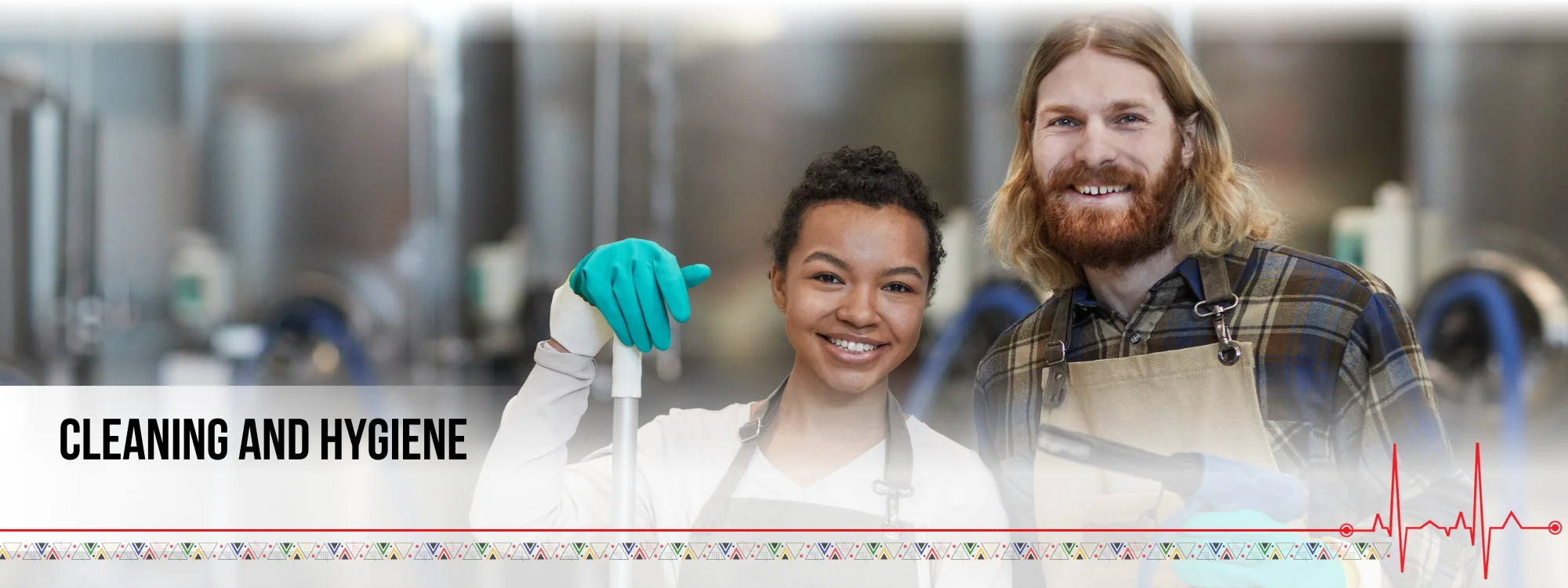
The cleaning, hygiene, recycling, and waste management industry plays a vital role in protecting public health, environmental safety, and workplace hygiene. Employees in this sector are regularly exposed to chemical agents, biological hazards, contaminated materials, sharp objects, heavy equipment, and physically demanding tasks — making occupational health medicals essential for employee safety and legal compliance.
Occupational health in cleaning, hygiene, and waste management environments is more than a regulatory requirement — it is a shared responsibility that protects employees, the public, and business operations. From contract cleaning staff and hygiene services to recycling workers and waste management personnel, employee health and medical fitness are critical in preventing occupational illness, injuries, and the spread of infection.
Employee health has a direct impact on workplace safety, service quality, and operational continuity. Regular occupational health medical surveillance and medical examinations help ensure employees are medically fit to perform their job-specific duties safely — before employment, during employment, and on exit. To support a risk-based and compliant medical assessment, the Employer must complete a Man Job Spec Form, detailing the employee’s job-related risks and exposures, and submit it together with the Employee/ Patient at the time of the occupational health medical examination.

Download the Cleaning and Hygiene and the Recycling and Waste Management Occupational Health Guide now to learn more about the occupational health risks, recommended medical surveillance, biological monitoring, and essential Critical Personal Protective Equipment (PPE) for each cleaning and hygiene or recycling and waste management-related role.

Industry regulations that determine which medicals to complete include:
- Occupational Health and Safety Act (No. 85 of 1993)
- Hazardous Chemical Agents Regulations (2021)
- Hazardous Biological Agents Regulations (2001)
- Waste Act, 2008 (National Environmental Management: Waste Act)
- General Safety Regulations
- ISO 14001: Environmental Management Systems
- Noise-Induced Hearing Loss Regulations, 2003
- Lead & Heavy Metals Regulations
Workers in the recycling and waste management sector, especially sorters, are exposed to a great variety of health hazards too. These range from hypodermic needles and diapers to the mercury and lead in thermometers, batteries and fluorescent lights.
These chemicals include acetone, formaldehyde and hydrochloric acid, which are known to cause, for example:
- Irritation of the eyes and mucus membranes
- Skin dermatitis
- Respiratory disorders such as asthma
- Different types of cancers
In addition, cleaning staff are exposed to biological hazards such as bacteria, viruses and moulds, which they could inhale, absorb through the skin or even ingest accidentally. Exposure to blood-borne pathogens is common for cleaners in the healthcare sector and puts them at risk of contracting, for example, hepatitis viruses. Those who clean public places can come into contact with animals such as birds and rodents and their excrement, which carries additional health risks.
Cleaning can also be physically demanding work. It often necessitates working with awkward equipment in confined spaces that require odd postures, such as bending over or backwards. This can be strenuous for workers’ bodies and lead to musculoskeletal disorders. Vibrating equipment and noise can also cause physical strain, whereas heat stress could occur if workers work in hot or humid environments.
Workers in the recycling and waste management and protective equipment sector, especially sorters, are exposed to a wide variety of health hazards. These range from used hypodermic needles and diapers to mercury and lead in thermometers, batteries, and fluorescent lights. Dust and airborne contaminants are common at waste and recycling facilities. They may contain micro-particles of plastics or glass, as well as toxic substances such as asbestos or silica. All of these are known respiratory irritants.

By law, cleaning, hygiene and recycling workers fall into three categories, all requiring a medical certificate of fitness:
- General – limited risk exposure to dust, noise or hazardous chemicals.
- Risk-Based – chemical exposures (cleaning agents), and dust.
- Operator – operators/ drivers of vehicles.
The following chart shows the tests that are completed for each category:
| General | Risk-Based | Operator | |
|---|---|---|---|
|
Baseline Questionnaire (medical and family history) |
|
|
|
|
Weight |
|
|
|
|
Height |
|
|
|
|
Blood Pressure |
|
|
|
|
Urine |
|
|
|
|
Glucose |
|
|
|
|
Audio Screening |
|
|
|
|
Spirometer / Lung Function |
|
|
|
|
Snellen Eye |
|
|
|
|
Keystone Eye |
|
|
|
|
Risk-Based Questionnaire |
|
|
|
|
Biological Monitoring (additional cost) |
|
|
|
|
Multi-Drip Strip (additional cost) |
|
|
|
Cleaning, Hygiene & Recycling Medicals South Africa
Each clinic offers state-of-the-art technology to carry out Occupational Health services effectively.